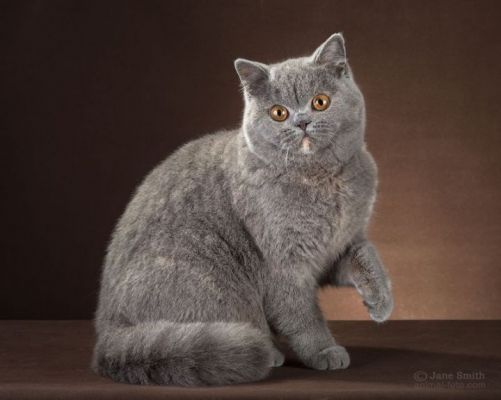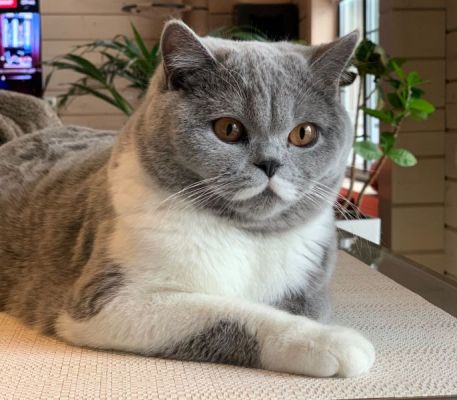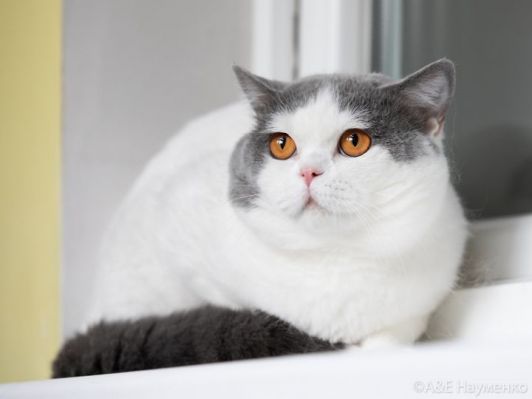
In Great Britain, the appearance of domestic cats was caused by the same factors as in other territories — cats here also originate from Asian countries and Egypt. Cats also inhabited the British Isles, but they were practically the same as European cats. The differences that appeared between them were a long process associated with human labor and complex work on selecting the most attractive qualities of animals.
The 19th-20th centuries were the period of breed creation. Over time, the breed transformed and changed, but the cats retained their main features and became more interesting. Thus, the British were able to create their own breed, which at that time also had French feline blood, as the war caused mass death of cats. Gradually, clear signs of the breed were formed: head shape, ear shape, paw thickness, coat. However, gradually the experiments of cat lovers led to the emergence of interesting and truly original colors, among which the most beloved and popular remained blue (gray).
However, fashion demanded new standards and inspired new experiments, thus some breeding rules were even violated, for example, crossing with long-haired cats was allowed, which is considered unacceptable by breed standards.
The creation of this breed can be called record-long, as it received recognition only in 1980, but the appearance of cute, smiling, and such lovely cats was worth the long years of feline variations, labor, and effort.